Back
01 - MOODI


Category :
Mobile App
Duration :
6 Weeks
Team :
4 Members
Role :
Researcher, UX/UI Designer
Mood-based free iOS App that shows free activities for backpackers.
Welcome!
Explore free activities with your mood
Let’s Lead your mood...
Moodi doesn’t decide the destination - it helps you decide what feels right in the moment.
Get Started
Happy
Good Morning !
We’d like to give you some recommendations. How are you feeling right now?
Bangkok Art and Culture Centre
“Bright, colorful creativity that keeps your energy high.”

About this place
BACC is a free contemporary art centre in central Bangkok featuring rotating exhibitions and cultural events by Thai and international artists.
Opening Hours
Tuesday - Sunday : 10:00 AM - 8:00 PM
Go to Website
Things You Can Do
🎨 Explore contemporary art exhibitions
🖌️ Discover emerging artists
📸 Enjoy the architecture & photo spots
🎭 Join cultural events & talks
🧑🎓 Observe workshops or student exhibitions
🗓️ Check pop-up exhibitions
How you can go

My saved activities

Lumpini park
Free Aerobics Classes
Opening Hours : 5:00 - 7:00
8 mins away
Lumpini park
Free Aerobics Classes
Opening Hours : 5:00 - 7:00
8 mins away
View
Delete
Bangkok Art and Cultu....
Culture events, talks and creative activities are held.
Opening Hours : 5:00 - 7:00
8 mins away

MBK Center
Free Muay Thai Fight Night
Opening Hours : 18:00 – 20:00
8 mins away

Wat Mahatha
Free Meditation Sessions
Opening Hours : 18:00 – 20:00
8 mins away
My Mood History
February
2026
02
Mo
Tu
We
Th
Fr
Sa
Su
5
6
7
13
14
15
8
16
17
18
19
20
21
22
9
23
25
26
27
28
1
10
2
3
4
5
6
7
8
0
20%
40%
60%
80%
100%
Average mood in February
Active
Chill
Happy
Party
Adventurous
Low Energy
25% more active than usual month. You felt chill most of the month.
Gen Z travelers experience decision fatigue
To understand how Gen Z backpackers make travel decisions, we conducted open-ended interviews focusing on decision-making, budgeting, trust, and daily travel behaviors. After synthesizing the findings, we found that travelers often feel overwhelmed by too many choices and spend more time searching and comparing than exploring. Secondary research also supported the impact of information overload and uncertainty on travel decisions.




The biggest friction happens during travel
Mapping the backpacker journey across the pre-travel, during-travel, and post-travel stages helped us identify where travelers experience the most friction. The biggest gap appeared during travel, when backpackers often feel overwhelmed by too many recommendations and spend more time searching than exploring. This revealed an opportunity to help travelers make confident decisions with less planning stress.

TikTok
TikTok
Guide Books
Word of Mouths
Words of Mouth
Words of Mouth
Guide Books
Websites
Chatgpt
Chatgpt
Google Map
HostelWorlds.com
12Go
Booking.com
Trip.com
Agoda
Words of mouth
Paid Ads
Family
Friends
Paid Ads
Paid Ads
Travel Insurances
Guide book
Guide book
Guide book
Visa
Visa
Back pack
Physical Notes
TikTok
TikTok
TikTok
Photos
Photos
What’s app
Chatgpt
Words of mouse
Words of mouth
Family
Family
Friends
Friends
Physical Notes


TikTok
TikTok
TikTok
GuideBook
Gallery
What’s app
Chatgpt
Words of mouse
Family
Family
Friends
Friends
Physical Notes


Departing

TikTok
TikTok
Guide Books
Word of Mouths
Words of Mouth
Words of Mouth
Guide Books
Websites
Chatgpt
Chatgpt
Google Map
HostelWorlds.com
12Go
Booking.com
Trip.com
Agoda
Paid Ads
Family
Friends
Paid Ads
Guide book
Guide book
Visa
Physical Notes


TikTok
TikTok
What’s app
What’s app
Chatgpt
Chatgpt
Google Map
Words of Mouth
Google Map
Google Map
Get-your-guide
Guide-Book
GoogleTranslate
Guide Book
Websites
Nomadtable
Grab
Grab
GoogleTranslate
GoogleTranslate
Bolt
Bolt
Paid Ads
Visa
Physical Notes
Sign board
Sign board
Money exchange
Hostel stuff
Hostel stuff
Sim card
Locals
Locals
Tourists
Tourists
Other backpackers
Other backpackers
Other backpackers
During-Journey


TikTok
TikTok
What’s app
What’s app
Chatgpt
Chatgpt
Google Map
Words of Mouth
Google Map
Google Map
Get-your-guide
Guide-Book
GoogleTranslate
Guide Book
Websites
Nomadtable
Grab
Grab
GoogleTranslate
GoogleTranslate
Bolt
Bolt
Paid Ads
Visa
Physical Notes
Sign board
Sign board
Money exchange
Hostel stuff
Hostel stuff
Sim card
Locals
Locals
Tourists
Tourists
Other backpackers
Other backpackers
Other backpackers
During-Journey
Back Packers
Gen Z
Existing tools provide information, but not decisions
Existing travel platforms provide inspiration, reviews, maps, and trip-planning tools. However, travelers still need to compare information across multiple sources before deciding what to do.
This revealed an opportunity to simplify the decision-making moment, rather than simply providing more information.
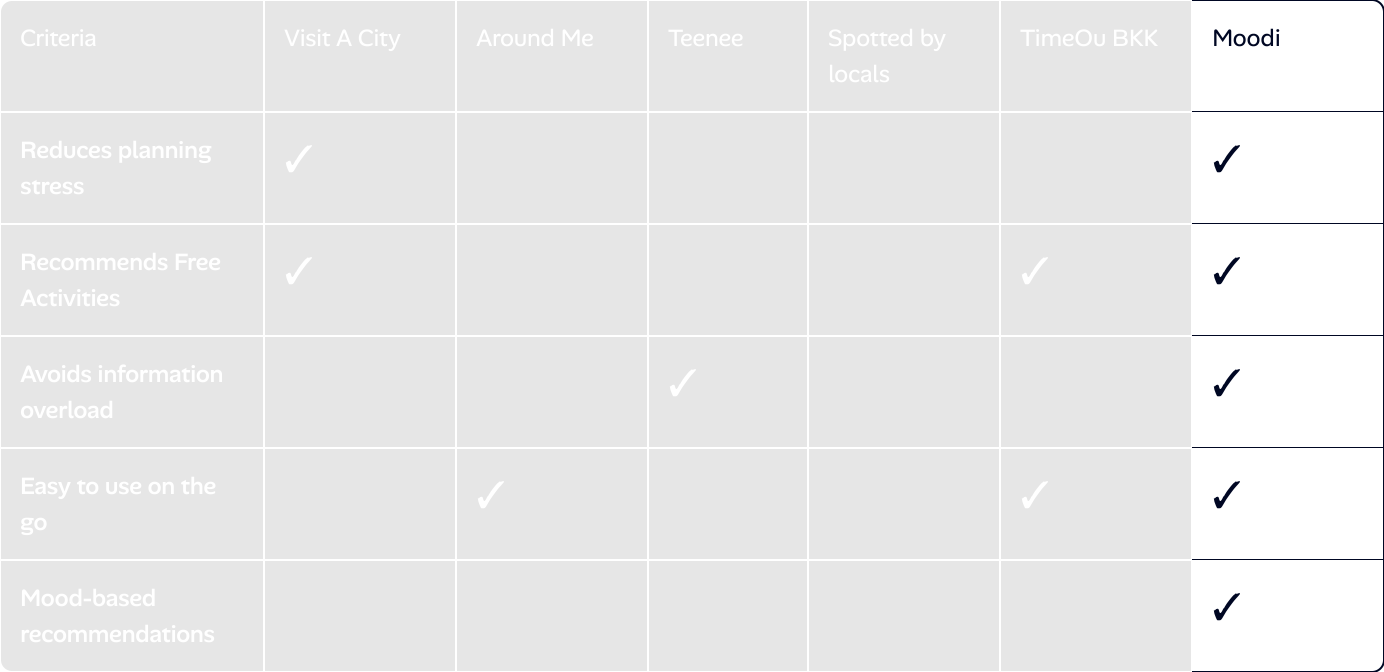
Backpackers rely on multiple fragmented tools
Market research revealed that Gen Z backpackers rely on multiple fragmented tools throughout their journey. This highlighted an opportunity to simplify travel decision-making within a single experience.
Personas transformed raw research into relatable user archetypes, helping the team empathize with backpackers’ goals, frustrations, and behaviors throughout the design process.

“I came here to see the world, but I’m spending all my time looking at my screen.”
Decision-Fatigued Daniel (Primary Persona)
PAIN POINT
WORKAROUND
Too many travel apps show long lists and maps, making decisions stressful
Free activities are hard to identify among paid options
Social media information feels untrustworthy or outdated.
Planning every step drains energy and reduces enjoyment
Scrolls through maps and blogs until something feels right.
Saves many places but visits only one or two.
Asks friends for advice or follows random recommendations
Chooses nearby options by convenience, not interest

“I saved so many places online... but now I don’t know where to go”.
PAIN POINT
WORKAROUND
Social media flood her with recommendations, making it hard to choose.
Most content feels staged or optimized for likes.
Saving, comparing and planning from social media drains enjoyment.
Too many recommendations lead to decision fatigue.
Asks experienced backpackers or follows nearby crowds.
Checks comments or searches for “real” opinions
She postpones decisions or repeats same areas.
She scrolls until tired and chooses what feels familiar.
Social-Media-Overloaded Sophia
Lazy Larry

“I don’t want to plan—just tell me something free I can do right now.”
PAIN POINT
WORKAROUND
Planning feels like work after a long travel day.
Too many choices drain his energy.
Most travel apps take too many steps to show useful results.
Paid activities dominate recommendations, making
him hesitant.
Avoids planning and hopes something nearby looks interesting.
Repeats familiar or nearby activities instead of exploring.
Opens an app briefly, then closes it if results aren’t
instant.
Skips activities to avoid spending money.
How might we help Decision-Fatigued Daniel?
Research revealed that Daniel spends more time searching for things to do than actually experiencing the city. With countless travel apps, recommendations, and online resources competing for his attention, making even simple decisions can feel overwhelming. To address this challenge, I designed Moodi, a mood-based travel companion for Gen Z backpackers. By reducing choice overload and simplifying travel decisions, Moodi helps backpackers spend less time planning and more time exploring.
Onboarding
Daniel, a new user, can "Get Started" without creating an account. He only needs to swipe right after reading the information on the onboarding screens.


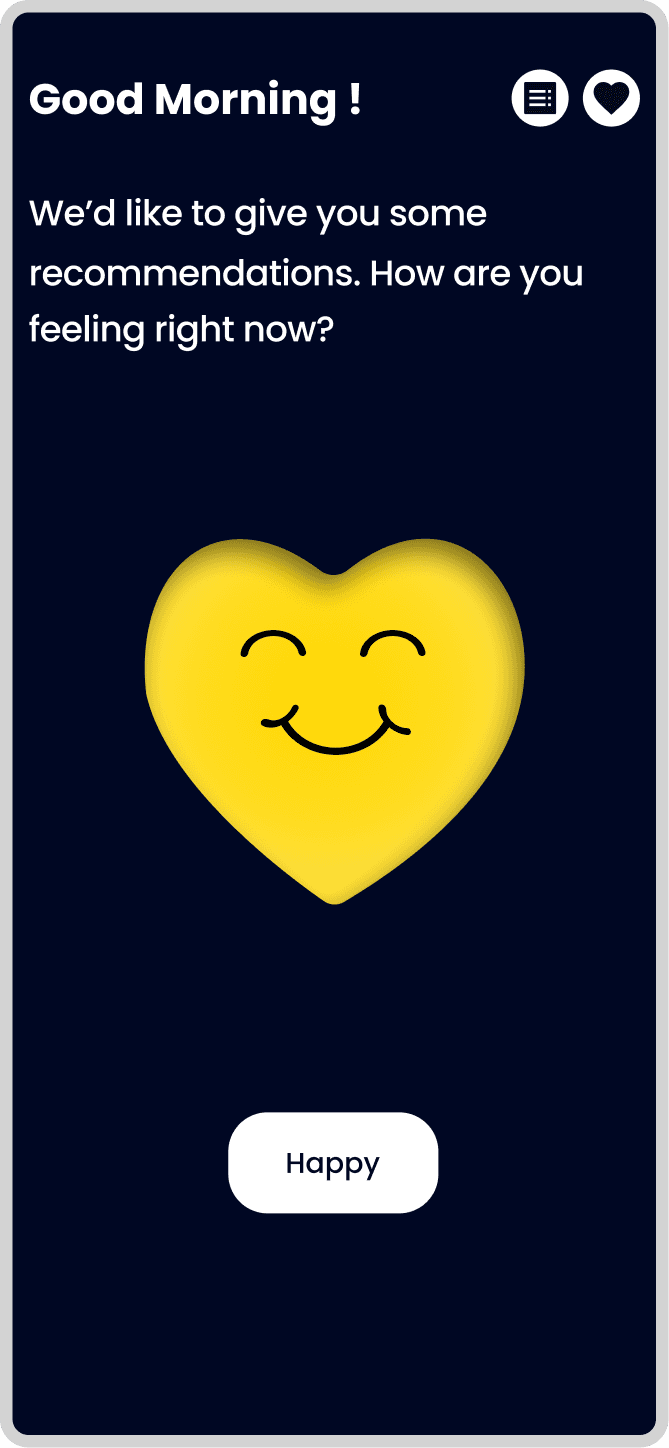


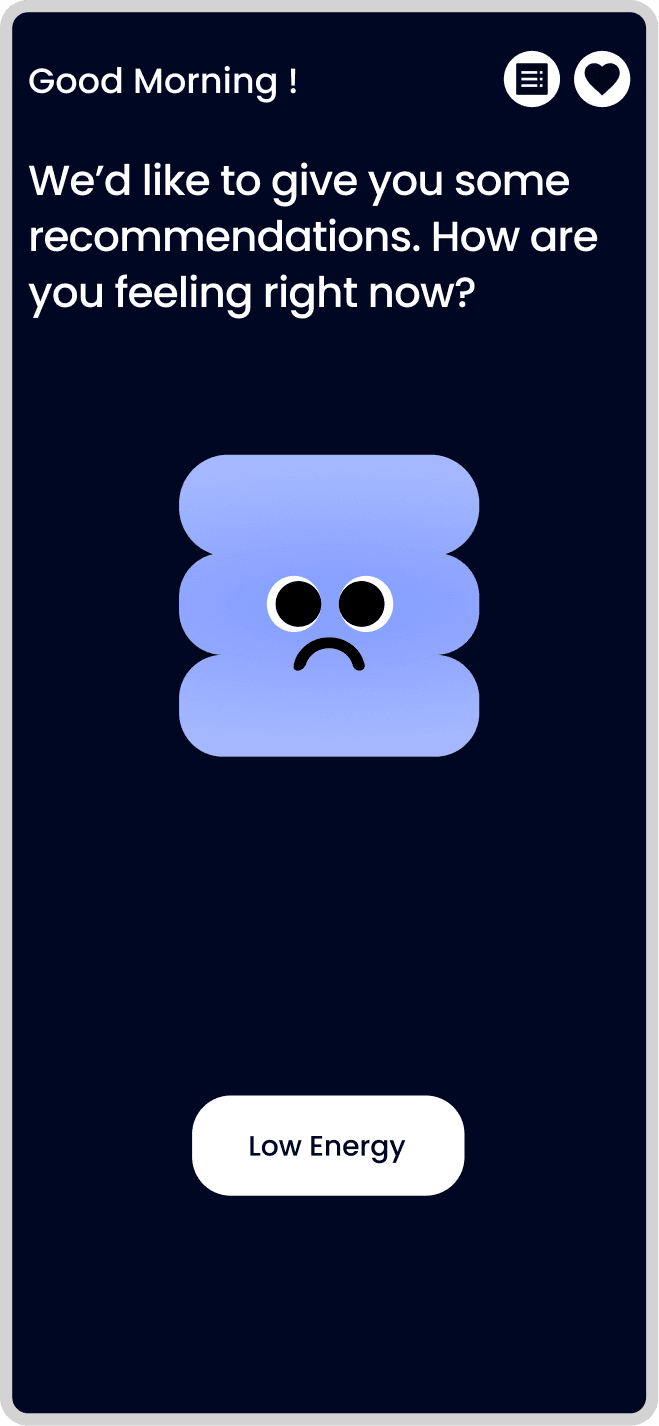
The main homepage displays six mood options, each represented by a unique shape and color that reflects Daniel's mood: Active, Chill, Happy, Adventurous, Party, and Low Energy.


Home Page
About the place and mood history
Based on Daniel's mood, the app recommends free places to visit. He can swipe right to choose a place or swipe up to view details such as About This Place, Opening Hours, Things to Do, and Google Maps. The app also tracks his selected moods and shows weekly or monthly mood trends.


Get alert and saved activities
Here's a shorter and more natural version:
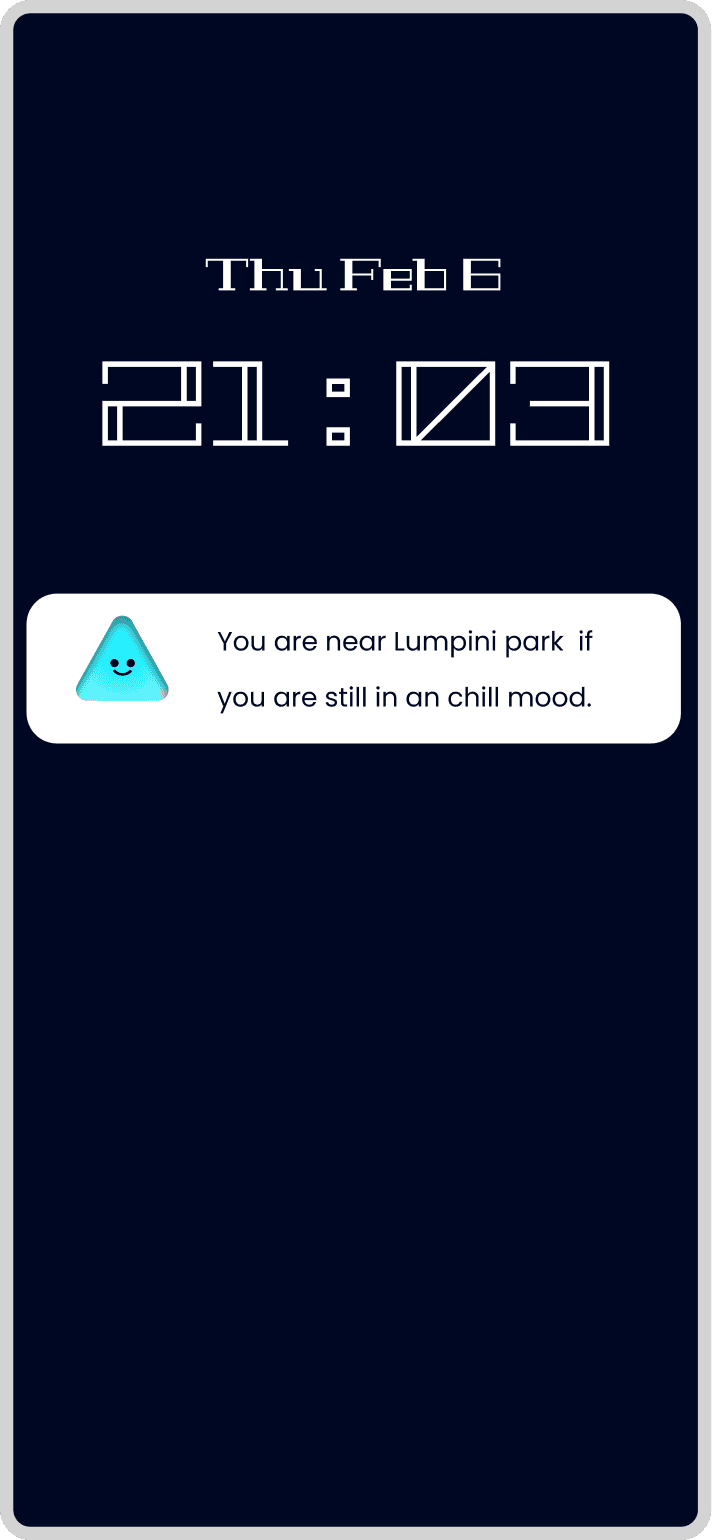
If Daniel leaves the app without changing his mood and later comes near a place that matches it, the app sends a notification recommending that place. If he cannot visit immediately, he can save it for later. Saved places can be viewed and filtered on the Saved page.
Mood Filter
Active
Chill
Happy
Adventurous
Party
Low Energy
Save

Mapping key user journeys
The user flow was designed to help Daniel move from choosing his mood to finding an activity with minimal effort. By keeping the journey simple, users can quickly explore relevant recommendations, view details, and decide whether to swipe or choose to new mood.
How might decision fatigue Daniel choose a place that matches his current mood?

Building a clear information architecture
The sitemap established a clear information architecture, organizing features and content into a structure that supports quick exploration and easy navigation.

Designing the visual language
Poppins
Aa
ABCDEFGHIJKLMNOPQRSTUVWXYZ
abcdefghijklmnopqrstuvwxyz
abcdefghijklmnopqrstuvwxyz
1234567890@!#$%^&*()
ABCDEFGHIJKLMNOPQRSTUVWXYZ
abcdefghijklmnopqrstuvwxyz
abcdefghijklmnopqrstuvwxyz
1234567890@!#$%^&*()
ABCDEFGHIJKLMNOPQRSTUVWXYZ
abcdefghijklmnopqrstuvwxyz
abcdefghijklmnopqrstuvwxyz
1234567890@!#$%^&*()
ABCDEFGHIJKLMNOPQRSTUVWXYZ
abcdefghijklmnopqrstuvwxyz
abcdefghijklmnopqrstuvwxyz
1234567890@!#$%^&*()

Key Learnings
This project changed how I think about designing travel experiences. I learned that a good travel product does not always need to provide more information or more choices; sometimes the more valuable experience is helping users make a decision with less effort. I also learned to balance personality with usability, making sure that Moodi's playful visual language supported the core task instead of competing with it. Most importantly, the project helped me become more intentional about connecting research insights to specific design decisions and designing for the moment when a user needs to act, not just discover.

KHIN MYO KHANT
© 2026 Khin Myo Khant _ Astri.
UX/UI Designer based in Bangkok
There is always another idea to discover, and another chance to grow.
Hello! I'm Astri. I create intuitive and user-friendly digital experiences that solve real problems. Curious, always learning, and eager to grow through new challenges.
Hover to flip

About Us